
Allianz, Bosch, and LLMBase cooperated on LiveParking to address a concrete urban mobility problem: drivers lose time, create unnecessary traffic, and increase accident risk while searching for parking.
The project equipped vehicles with cameras and used AI to determine where parking spaces were available. Instead of relying only on static parking data or manual reporting, LiveParking could create a live view of street-level parking availability from vehicles already moving through the city.
For German cities, the goal was practical traffic reduction. Every unnecessary loop through a neighborhood adds congestion, emissions, and stress. LiveParking turned camera data into parking intelligence so drivers could be routed toward likely available spaces faster.
The cooperation combined mobility, insurance, and AI implementation perspectives. Bosch contributed vehicle and mobility context, Allianz connected the project to insurance and mobility-data use cases, and LLMBase helped build the AI and software foundation behind LiveParking.
The underlying problem was measurable: drivers lose around 41 hours per year searching for parking, roughly 40% of traffic accidents happen during parking and maneuvering, and an average of 4.5 kilometers are driven while looking for a space.
Allianz print magazine coverage
Allianz published the LiveParking cooperation and the wider mobility-data topic in a four-page article in its print magazine. The article covered how vehicle data, AI, and data sovereignty could create new services for drivers, insurers, and cities.
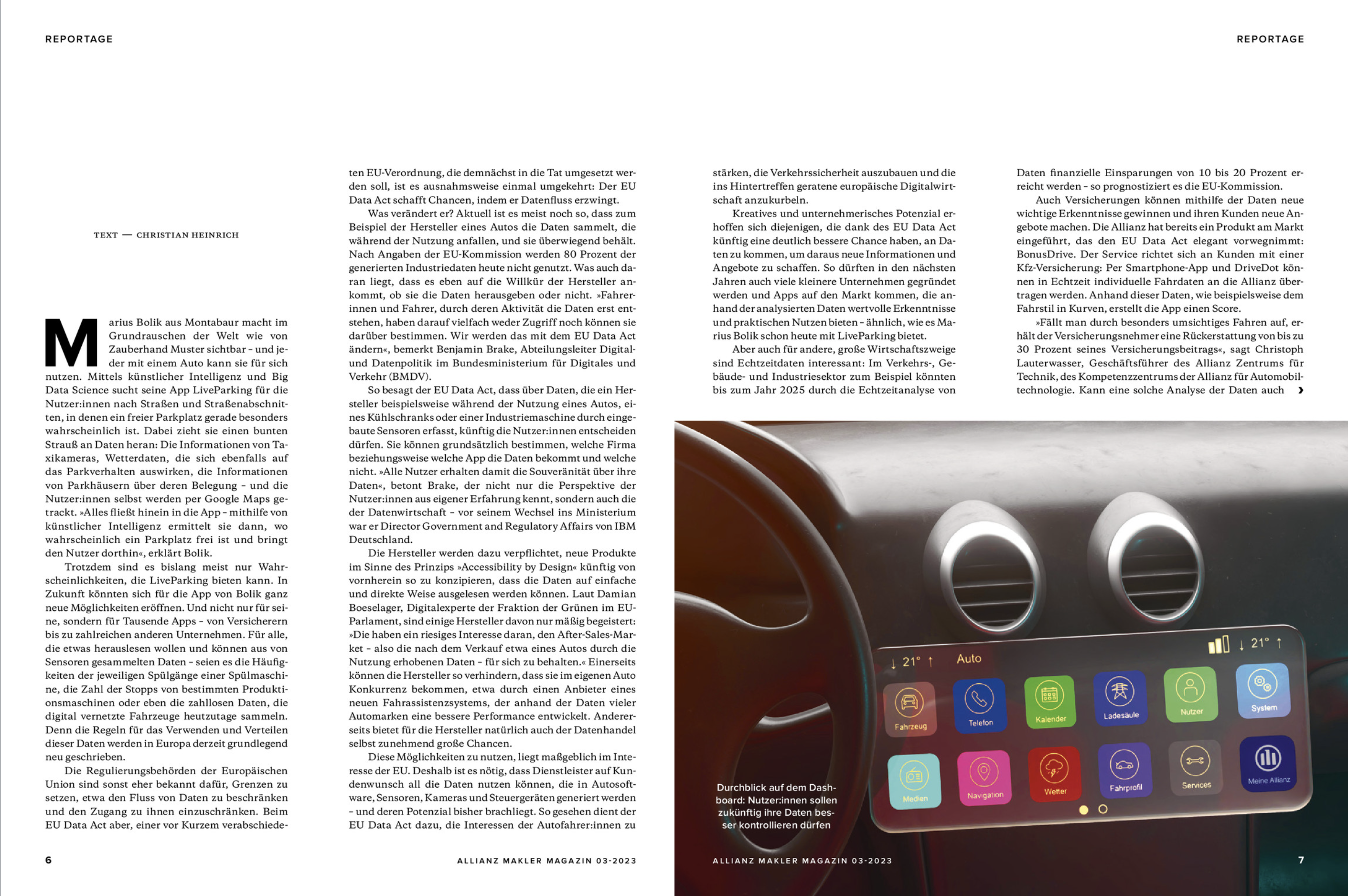
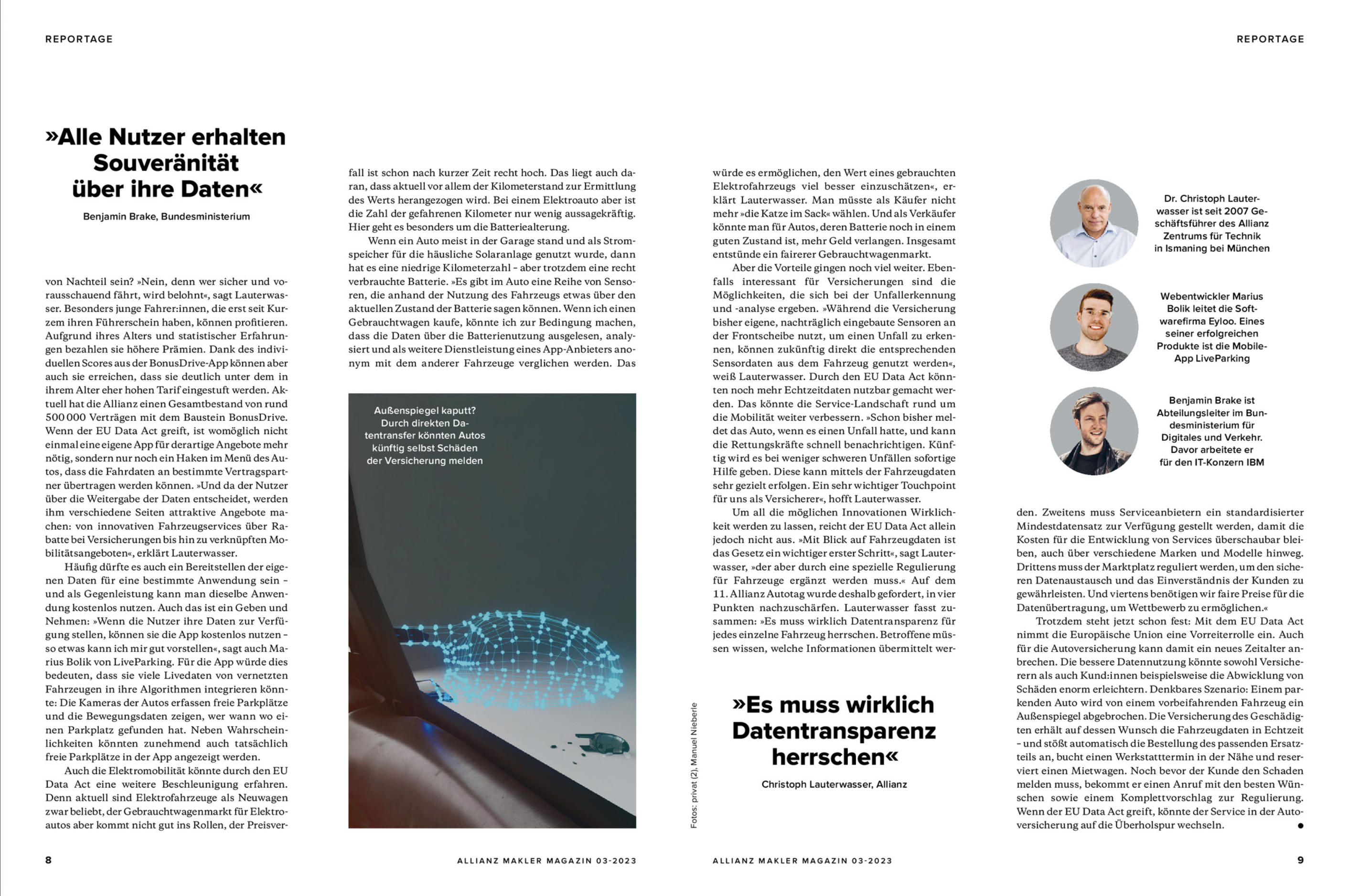
The coverage showed LiveParking as an example of how vehicle-generated data can become useful when customers keep control over how it is shared and when service providers can turn that data into immediate, practical outcomes.