AI News
Intel Advanced Packaging Business Targets Billion-Dollar AI Chip Deals
Intel's advanced chip packaging operation is pursuing billion-dollar deals with Google and Amazon as the company repositions itself in the AI infrastructure market.
Source and methodology
This article is published by LLMBase as a sourced analysis of reporting or announcements from Wired .
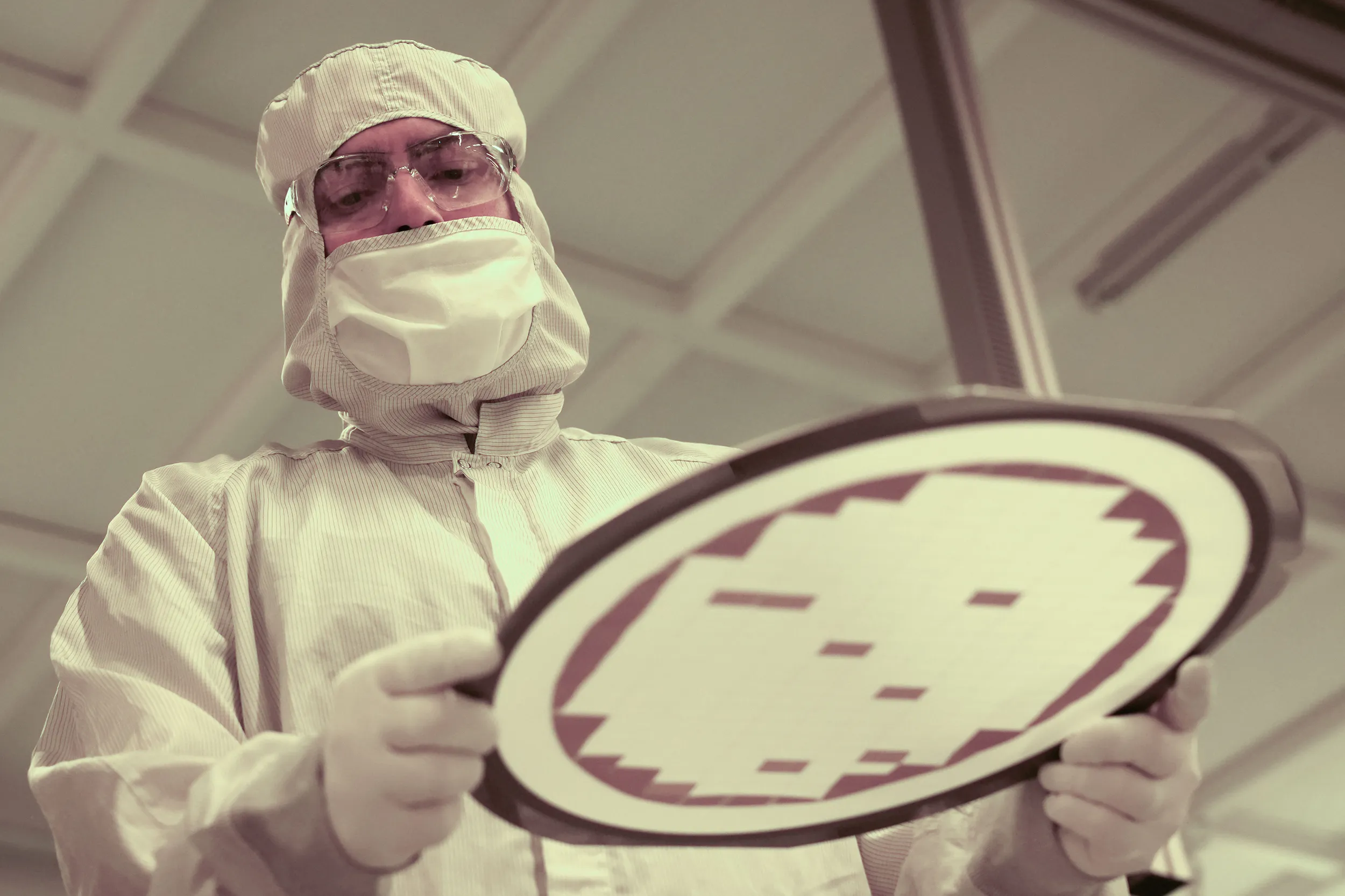
Chief financial officer Dave Zinsner told investors that Intel's advanced packaging revenue projections have grown from hundreds of millions of dollars to over $1 billion within 12 to 18 months. The company is reportedly in talks with Google and Amazon for packaging deals worth billions of dollars annually, according to Wired.
TSMC Competition in AI Infrastructure
Intel faces direct competition from Taiwan Semiconductor Manufacturing Corporation, which dominates global chip production and offers competing packaging technologies like CoWoS (chip on wafer on substrate) and SoIC (system on integrated chip). While TSMC maintains scale advantages, Intel is betting on technical differentiation through its EMIB and EMIB-T packaging processes.
The company claims its embedded multi-die interconnect bridge technology provides more "surgical" chip packaging compared to TSMC's approach, potentially offering better power efficiency and cost optimization for customers building AI accelerators and custom processors.
Foundry Strategy and Customer Acquisition
Intel's packaging business operates within its Foundry division, which the company split from its traditional CPU product business in 2024. The strategy targets large technology companies that design custom chips but outsource manufacturing and assembly processes.
Naga Chandrasekaran, who leads Intel's Foundry operations, confirmed expansion of packaging capacity in Penang, Malaysia, "amid rising global demand for Intel Foundry packaging solutions." The company also invested $500 million in CHIPS Act funding to restart operations at its Rio Rancho, New Mexico facilities.
Technical Differentiation and Market Positioning
Intel's EMIB-T technology, announced in May 2024 and rolling out to fabs this year, promises improved power efficiency and signal integrity between chip components. The approach uses smaller bridges between components compared to traditional 3D stacking methods, potentially reducing costs and power consumption for AI workloads.
The packaging business represents Intel's attempt to capture value in the AI supply chain without directly competing on cutting-edge chip manufacturing processes where TSMC maintains technological leadership.
Implications for AI Infrastructure Buyers
For European enterprises and AI teams evaluating custom silicon strategies, Intel's packaging expansion provides an alternative to TSMC-dominated supply chains. The potential Google and Amazon deals signal enterprise confidence in Intel's technical capabilities, though actual contract terms and delivery timelines remain unconfirmed.
Intel's projected 40 percent gross margins on packaging services could influence pricing across the advanced packaging market, potentially affecting costs for companies building AI infrastructure at scale. This analysis is based on reporting by Wired.
AI News Updates
Subscribe to our AI news digest
Weekly summaries of the latest AI news. Unsubscribe anytime.
More News
Other recent articles you might enjoy.




 Made in Europe
 Chat with 100+ AI Models in one App.
Use Claude, ChatGPT, Gemini alongside with EU-Hosted Models like Deepseek, GLM-5, Kimi K2.5 and many more.