AI News
NVIDIA DLSS 5 Faces Developer and Gamer Backlash Over Generative AI Features
NVIDIA's DLSS 5 introduces generative AI that modifies character faces without developer consent, drawing criticism from both gaming communities and development teams for overriding artistic intent.
Technical Shift from Performance to Visual Modification
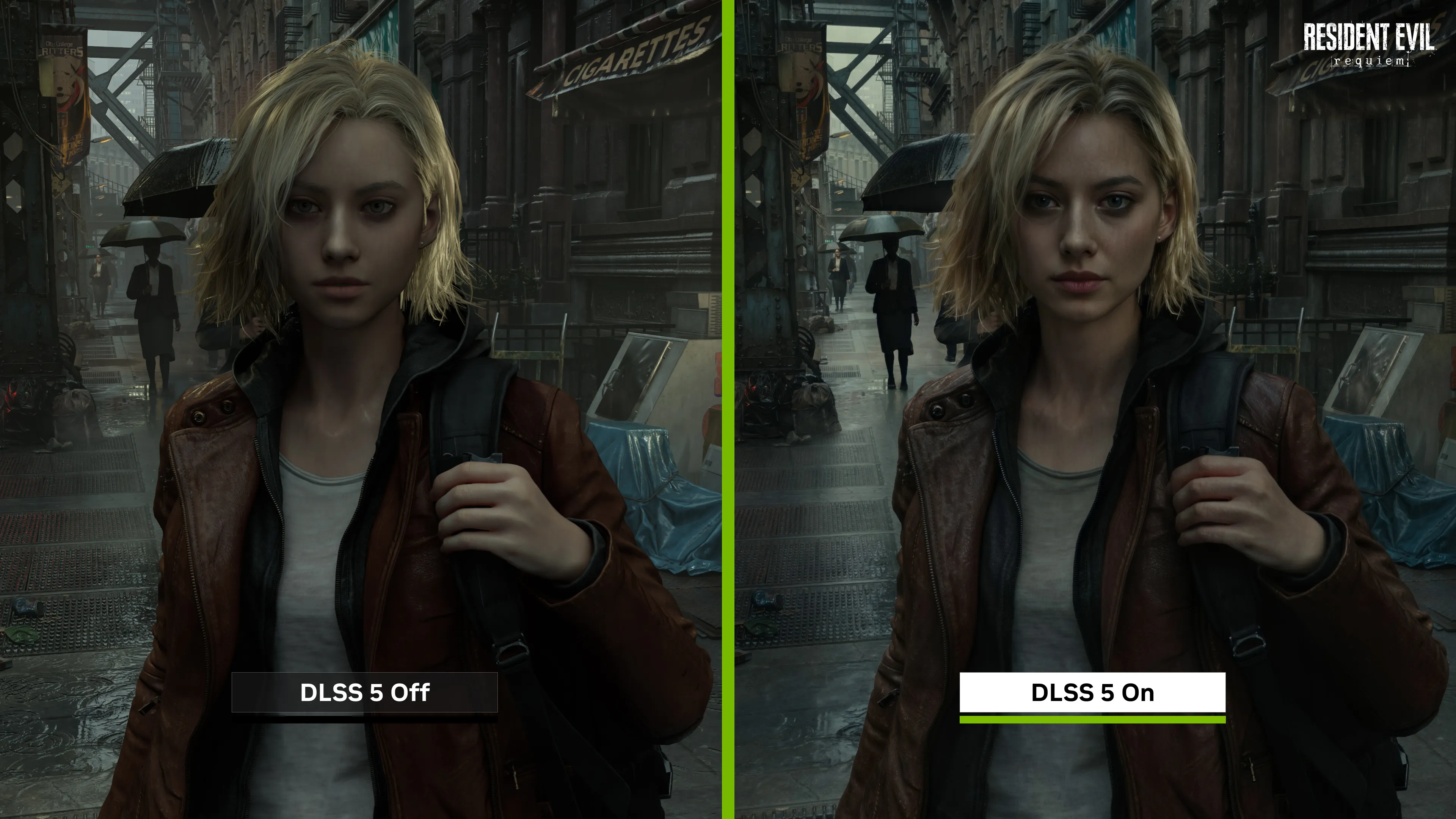
Previous DLSS iterations served as performance tools, using AI to upscale lower-resolution renders and insert generated frames to improve frame rates while maintaining visual quality. DLSS 5 represents a fundamental departure, actively altering game visuals through generative AI that modifies facial features, lighting, and textures.
Kevin Bates, CEO of Arduboy, acknowledged the technical achievement while noting concerns about implementation. The technology demonstrated improvements to lighting and facial detail in games including Capcom's Resident Evil Requiem, Ubisoft's Assassin's Creed, and Bethesda's Starfield during NVIDIA's demonstrations.
However, the demos revealed technical issues including visual artifacts and inconsistent rendering. In FIFA footage, a soccer ball displayed net textures before reaching the goal, while character faces showed altered proportions including modified eye size, lip fullness, and nose structure.
Developer Concerns Over Artistic Control
Game developers expressed frustration with DLSS 5's approach to visual modification. James Brady, who worked on Call of Duty: Modern Warfare 3, described the technology as devaluing artistic intent by functioning essentially as a "Snapchat filter" applied to carefully designed characters.
"The artist has a style, the artist has an art direction that you're going to give him, and that's something that AI kind of doesn't respect all the time," explained Raúl Izquierdo, an independent game developer. "Maybe I don't want my characters to be yassified."
Developers at Capcom and Ubisoft reportedly learned about their games' appearance in DLSS 5 demonstrations simultaneously with the public, according to Insider Gaming. This lack of prior consultation highlighted concerns about NVIDIA implementing visual changes without developer approval or creative input.
Performance Questions and Market Positioning
NVIDIA demonstrated DLSS 5 running on dual GeForce RTX 5090 graphics cards, raising questions about the technology's purpose and accessibility. Developers noted that meaningful adoption would require the technology to enhance performance on older hardware rather than showcasing capabilities on premium equipment.
"What's the point if you're not going to do it on weaker hardware?" Izquierdo questioned. "If this were done on an RTX 2080 graphics card, for instance, I think I would be thinking differently about it."
Marwan Mahmoud from Incrypt emphasized that while DLSS traditionally served as a helpful optimization tool, some games now rely too heavily on such technologies instead of proper optimization, potentially creating dependency on proprietary solutions.
Enterprise and Development Implications
For European development teams and enterprise buyers, DLSS 5 raises questions about vendor control over visual output and creative autonomy. The technology's one-size-fits-all approach may conflict with diverse art styles and regional aesthetic preferences across different markets.
The controversy also highlights broader concerns about AI integration in creative workflows, particularly when proprietary algorithms modify artistic work without explicit creator consent. This becomes especially relevant for studios working across multiple platforms and regions with varying visual standards.
Looking Forward
NVIDIA CEO Jensen Huang defended the technology following criticism, stating that gamers are "completely wrong" about DLSS 5. However, industry observers suggest the backlash reflects broader concerns about AI's role in creative processes rather than purely technical objections.
Bates predicted that generative visual enhancement "is going to be the default in a few years," regardless of current resistance. For development teams and graphics buyers, this signals a need to evaluate how proprietary AI features align with creative control requirements and artistic vision preservation.
The DLSS 5 response demonstrates the ongoing tension between technical capability and creative autonomy in AI-enhanced graphics pipelines. Wired reported these developments as part of broader discussions about AI integration in gaming technology.
AI News Updates
Subscribe to our AI news digest
Weekly summaries of the latest AI news. Unsubscribe anytime.
More News
Other recent articles you might enjoy.




 Made in Europe
 Chat with 100+ AI Models in one App.
Use Claude, ChatGPT, Gemini alongside with EU-Hosted Models like Deepseek, GLM-5, Kimi K2.5 and many more.