
LiveParking
LiveParking used AI and urban data to predict free parking

LiveParking's 2023 project used camera-equipped vehicles and AI to estimate where drivers could find a free space. Allianz and Bosch joined as project partners, and LLMBase contributed the AI and software implementation.

Drivers spend an estimated 41 hours a year searching for parking and cover about 4.5 kilometers during a typical search, according to LiveParking. In 2023, the company tested a new source of parking data: cameras mounted on vehicles already moving through city streets.
The system analyzed the scans with AI and identified areas where a free space was likely. LiveParking could then turn street observations into guidance for drivers instead of waiting for a manual report or relying only on static information.
A project with Allianz, Bosch, and LLMBase
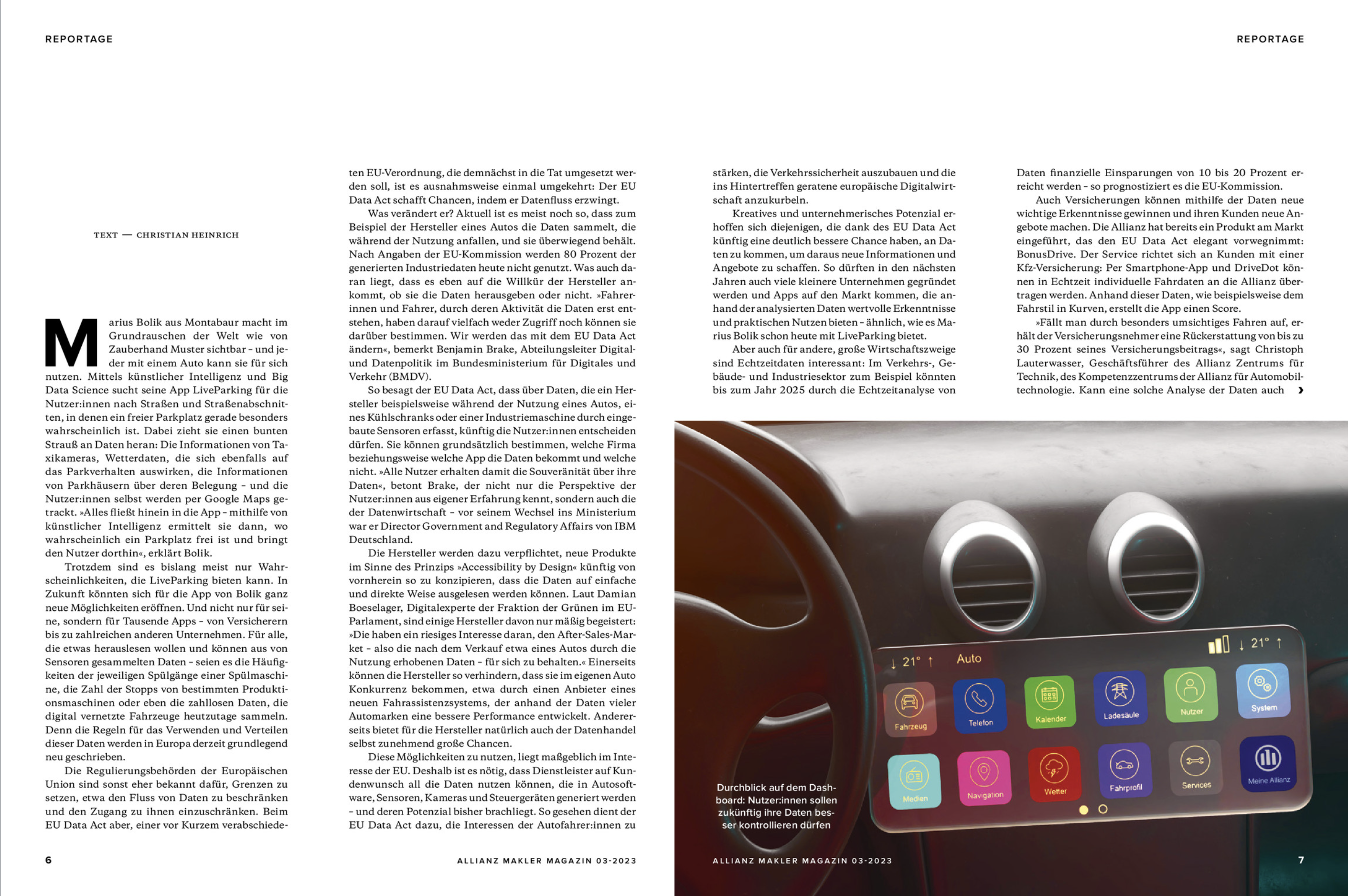
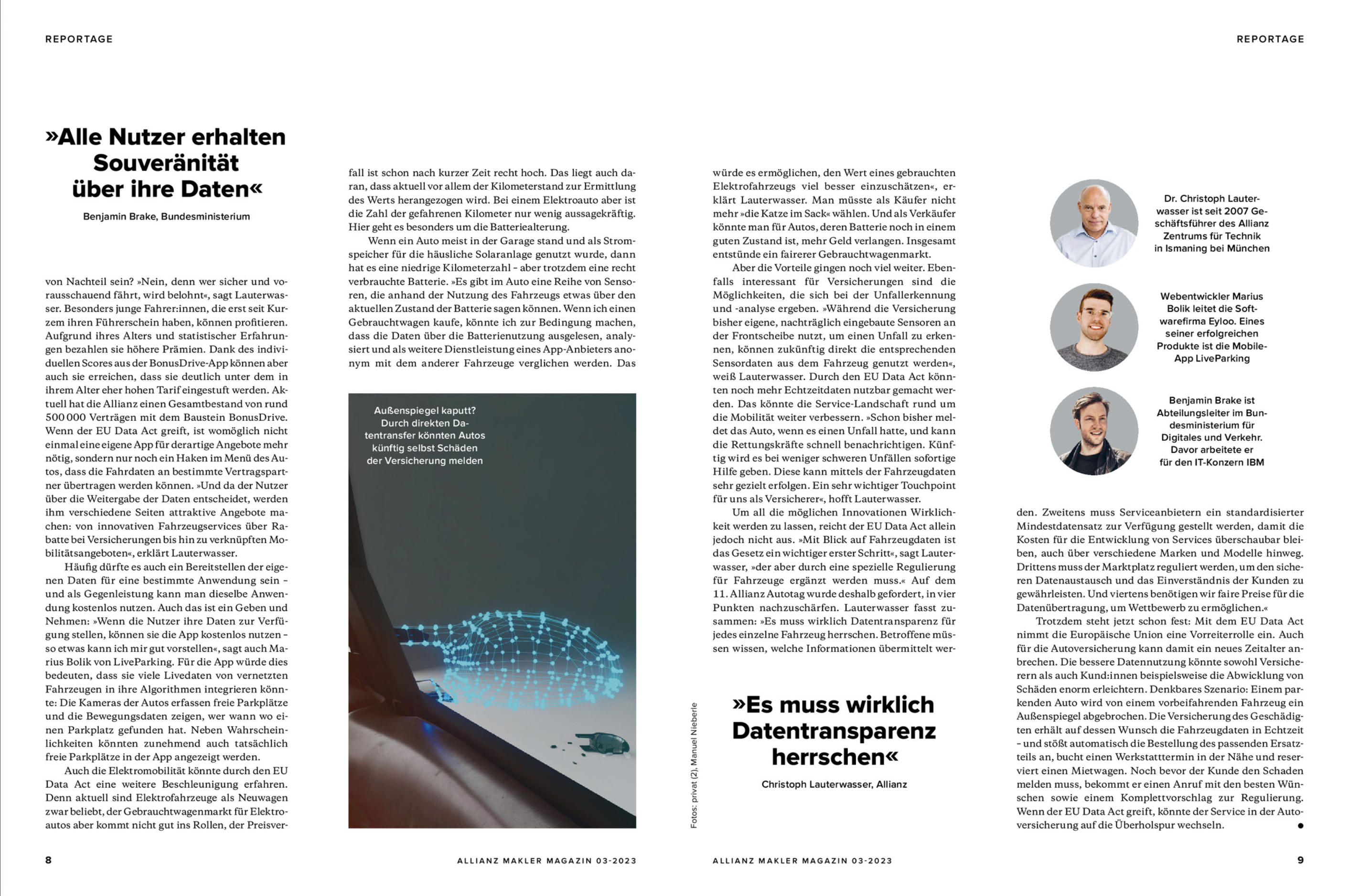
Allianz and Bosch joined LiveParking as project partners. Bosch contributed mobility and vehicle technology expertise. Allianz connected the work with insurance and mobility-data use cases and covered LiveParking in a four-page magazine feature. We contributed the AI and software implementation.
The Allianz article placed the project in a wider discussion about vehicle data and the EU Data Act. Its four pages showed how a service could turn data generated on the road into information that drivers could use during the same journey.
What LiveParking uses today
LiveParking later discontinued camera-based scanning because of the time and cost involved. The current service processes data from municipal parking-guidance systems instead and provides live parking information for more than 35 cities.
LiveParking’s current site describes the camera work as a discontinued project. The 2023 team tested the camera-based approach; today’s product uses a data source that is more practical to operate at city scale.